Context
Open Source Instrument
I am a Product Designer who used AI-assisted development for Context to solve a problem for the research community. Bridging the gap between OS-shortcuts and browser session state.
Role
Product Designer
Timeline
Open Source
Context
Research Utility
Logical Speed.
As a designer, my frustration wasn't with pixels—it was with Cognitive Latency. I realized that my research workflows were failing because the browser couldn't keep up with my intent. I used AI to build this bridge and released it to ensure no researcher has to suffer context-collapse.
Direct Contribution
"No dev handoff. I leveraged Antigravity to translate my UX intent into production-ready open source code."
Structural Logic
"I architected a custom .url interceptor to bridge OS files with browser logic—redefining session access."
Universal Utility
"My focus was on building a tool that exists purely in the background, a silent partner in the research process."
Design-Led
Heuristics.
I didn't just want to save tabs; I wanted to automate the discovery of Design Intent. I tuned my AI companion to build a semantic extraction engine that understands research context.
AI-assisted Development Rule 01
WORD FREQUENCY FILTER
"I directed the AI to implement an NLP-lite parser that isolates unique project identifiers from generic browser titles."
AI-assisted Development Rule 02
DOMAIN INTENT MAPPING
"I mapped design-led intents directly to URLs: recognizing Figma and GitHub as immediate markers of active session priority."
AI-assisted Development Rule 03
ADAPTIVE NAMING
"By analyzing tab resonance across the active window, I automated the folder-naming process to be completely frictionless."
Shadow
Orchestration.
I used AI-assisted development to build a production-grade OS-Browser bridge using Manifest V3. I directed the AI to build a self-destructing interceptor protocol that bridges digital assets with the local filesystem.
Locally Shelved Asset
My V3 Interceptor
Logic defined via design intent01 I BRIDGED THE OS GAP
"I leveraged AI to generate Internet shortcuts that talk directly to Chrome’s background thread, making digital assets feel as physical as documents."
02 I PURSUED SYSTEM CLEANLINESS
"I tuned the service worker to automatically purge redundant launch tabs, ensuring the workspace remains clinically precise."
03 I ORCHESTRATED FLOW
"By prioritizing local-first persistence, I ensured that massive contexts are captured and restored with absolute zero-lag."
Logical
Sharing.
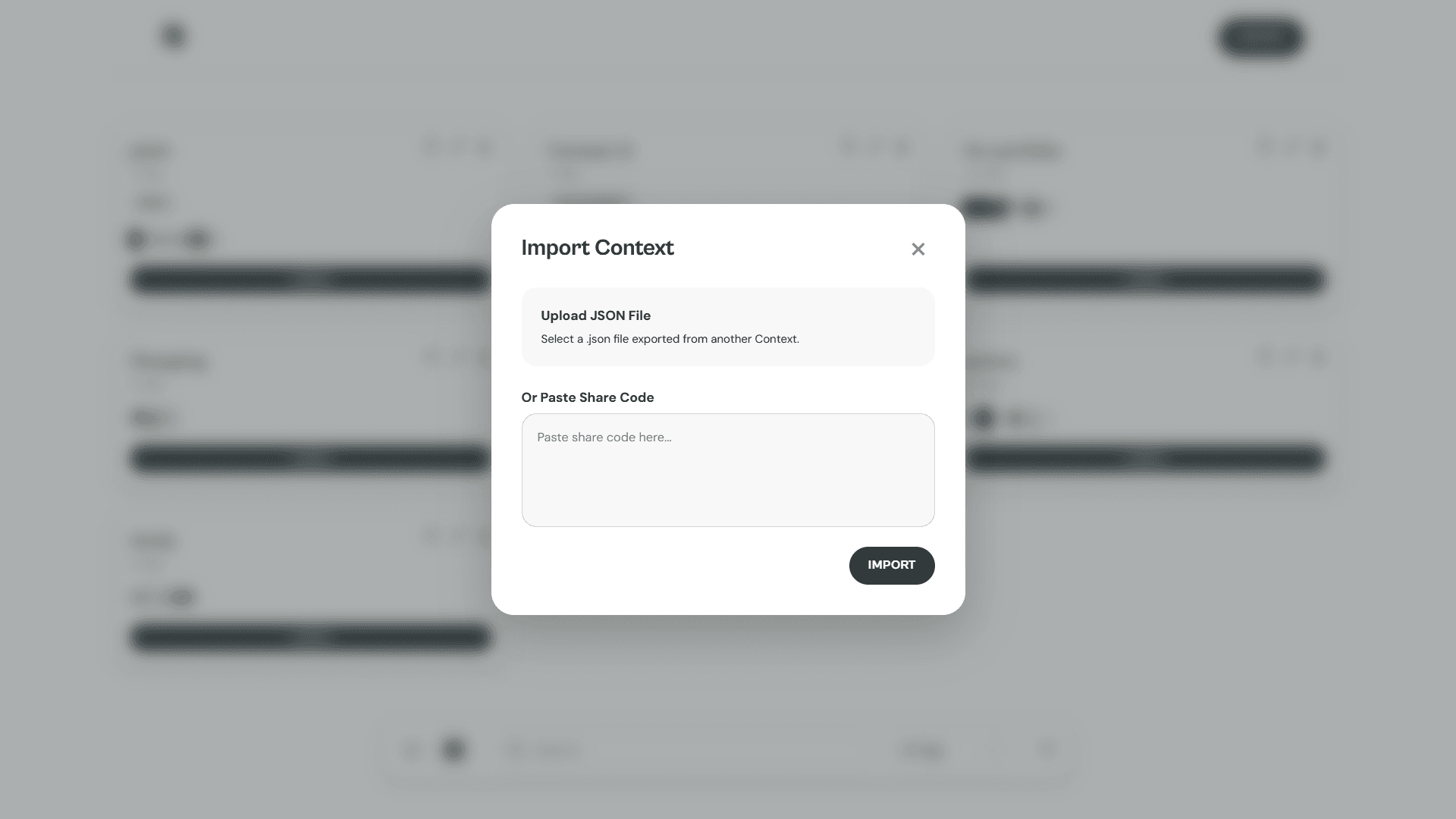
As an open source tool, I ensured that context is completely portable. I architected a serialization layer that turns massive sessions into lightweight JSON and share-codes.
My Base64 Protocol
I implemented a custom serialization protocol to share 20+ tabs as a single string. It allows context to be pasted into Slack or research documents instantly.
My JSON Persistence
I architected a file-driven backup system using JSON blobs, bridging the gap between temporary browser states and permanent OS-level assets.
High-density
retrieval.
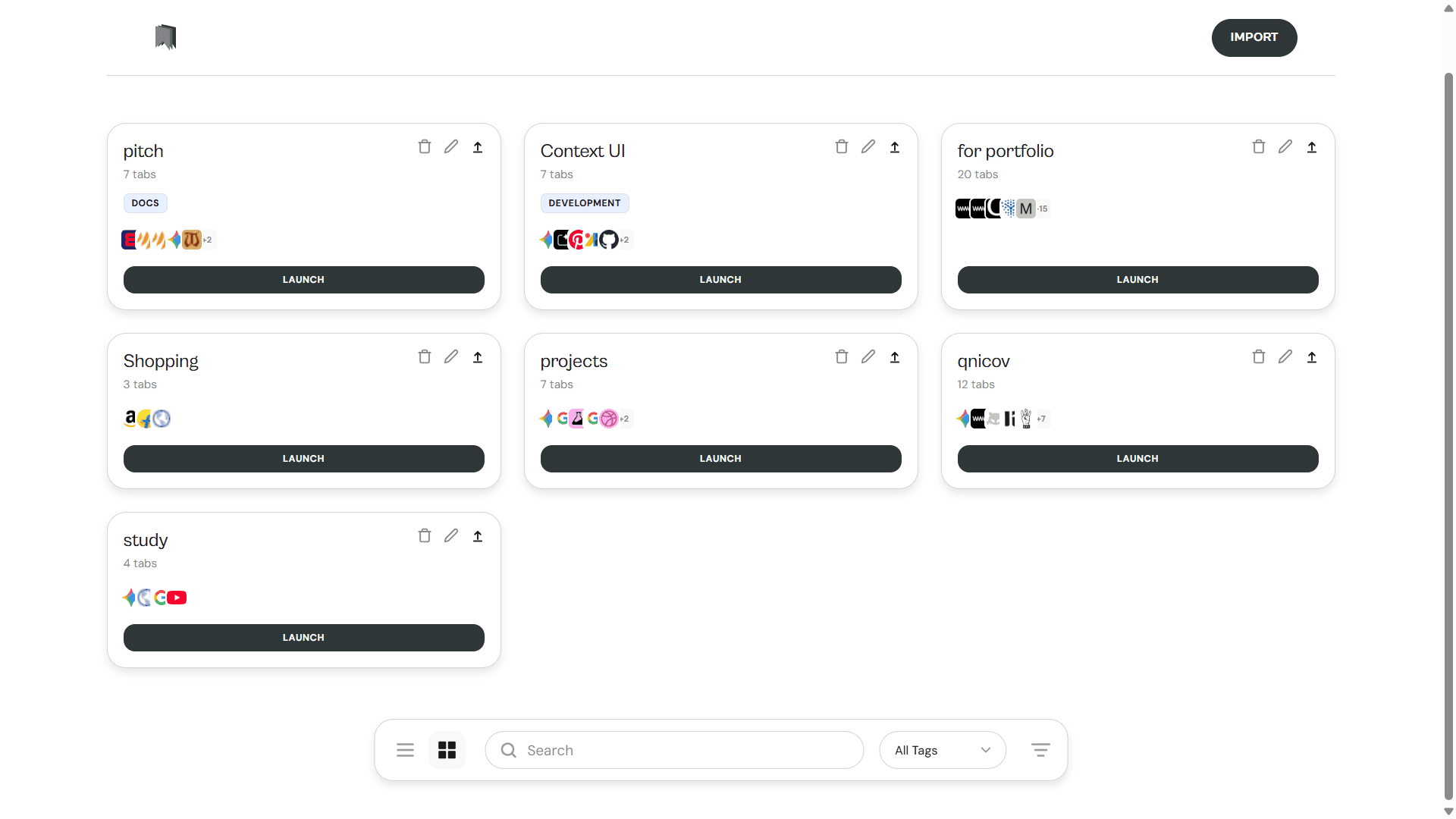
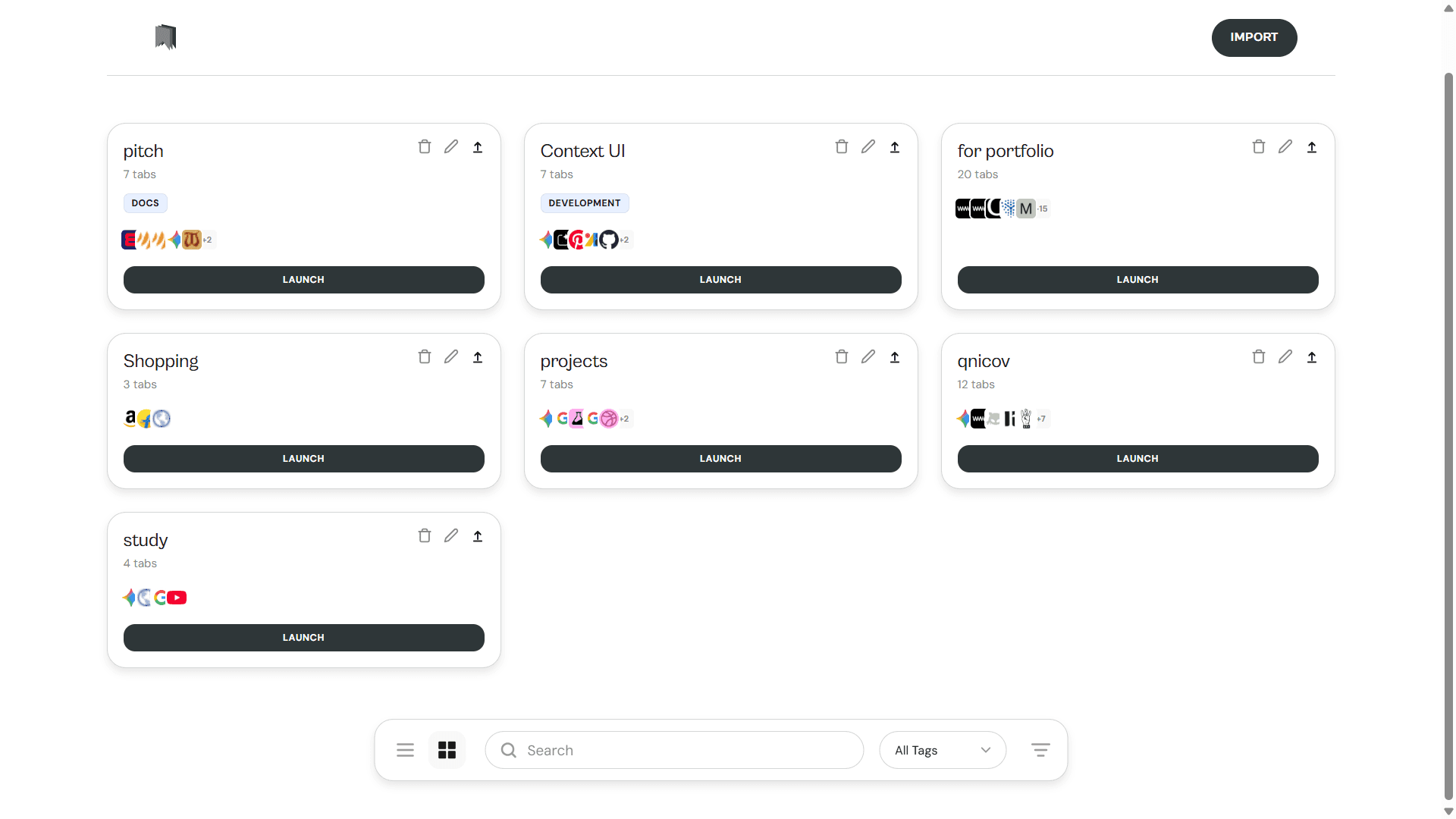
01 I PRIORITIZED FAVICON RECOGNITION
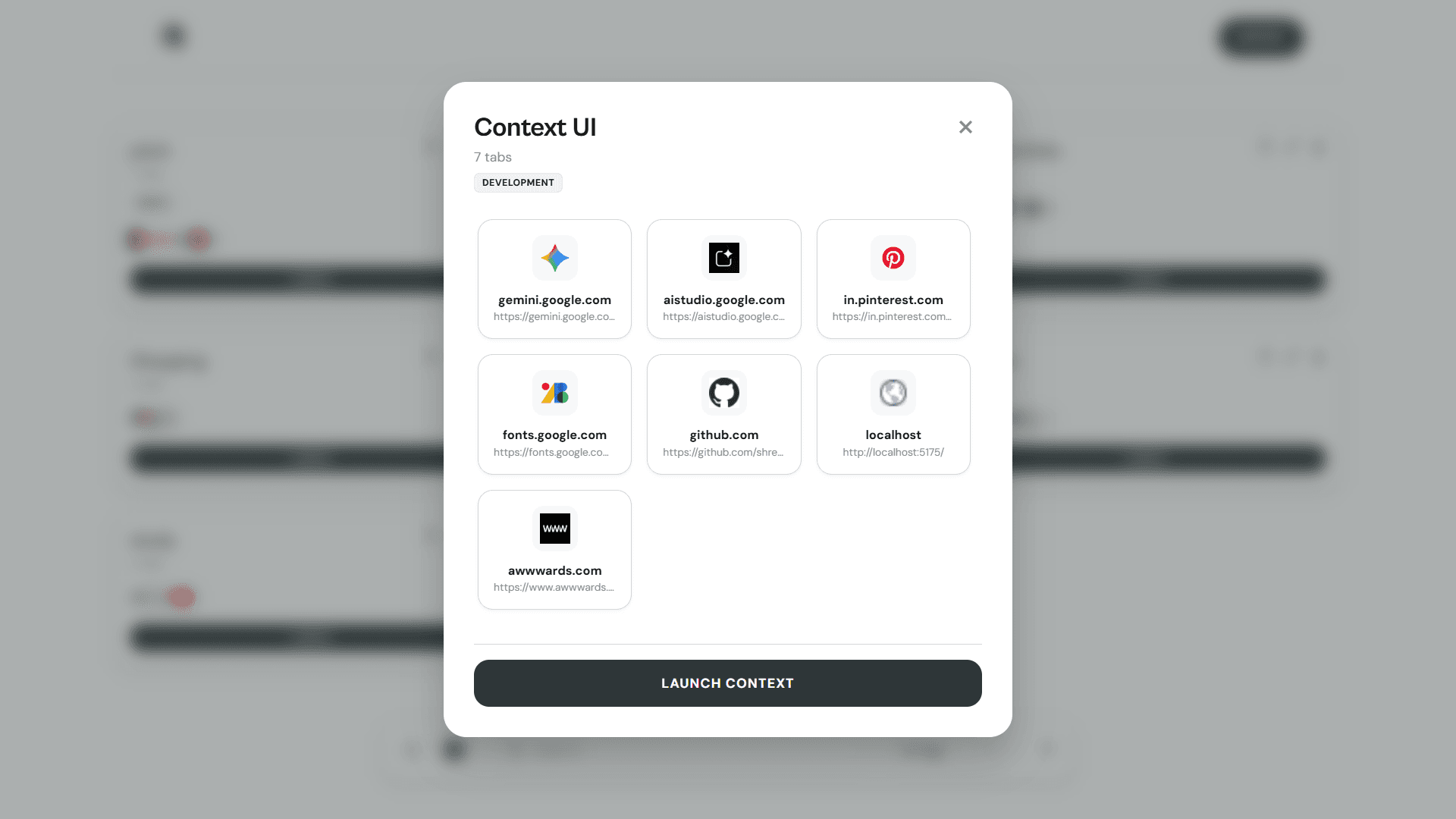
"I designed a clustered favicon system that allows me to identify a session visually in under 200ms—no reading required."
02 I BUILT AGNOSTIC DASHBOARDS
"I implemented Grid vs. List toggles to handle everything from creative mood boards to exhaustive technical documentation audits."
03 I ADDED REAL-TIME FILTERING
"I architected the tag and domain filter system to ensure I can retrieve any logical research burst in under 2 seconds."
High-Agency Design.
Community Impact
Released as Open Source utility.
Design Autonomy
Engineering handoffs required.
UI Gallery
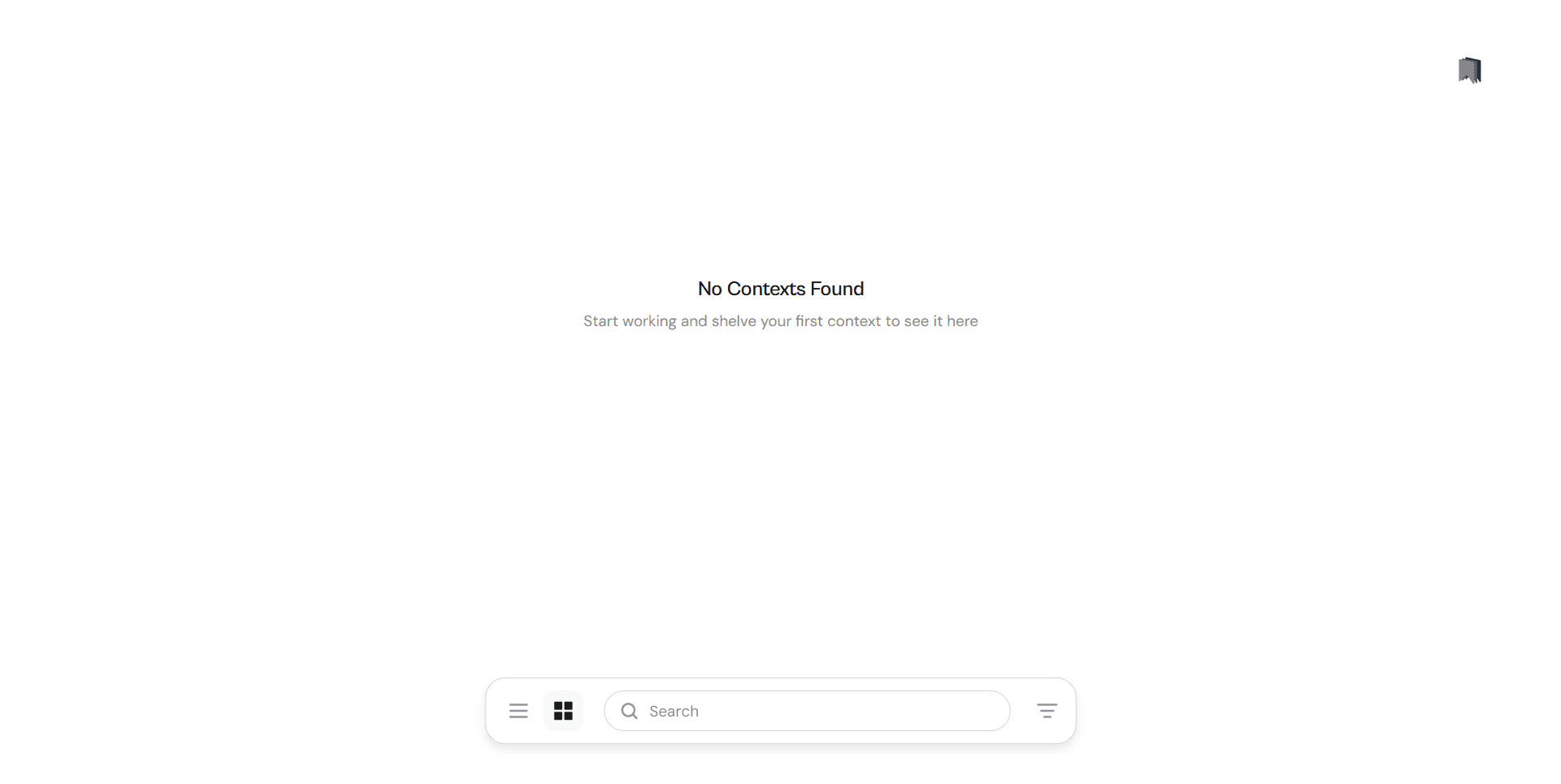
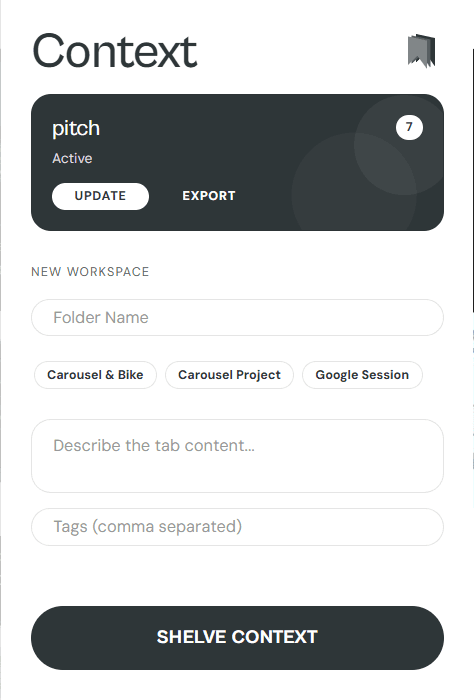
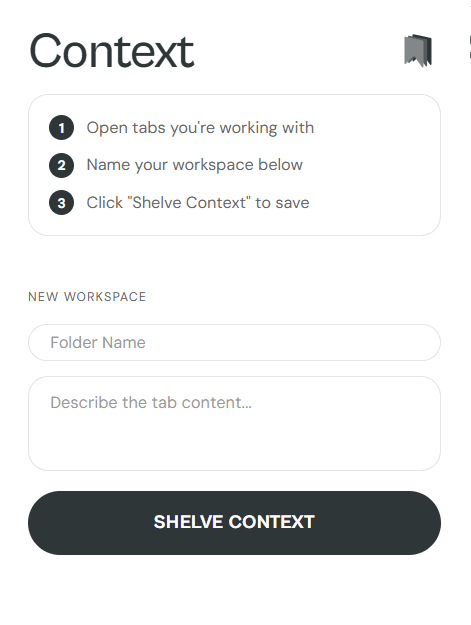
I am showcasing uncropped, high-fidelity engineering states. Every pixel of the Open Source interface is visible at scale.
VISUAL RECORD
End of MY Open Source Narrative
"AI-assisted development isn't about laziness; it's about the speed of intent. Released as an Open Source utility, Context is my commitment to bridging the gap between imagination and execution."