Crafting a local-first, component-centric AI workspace without subscription lock-in
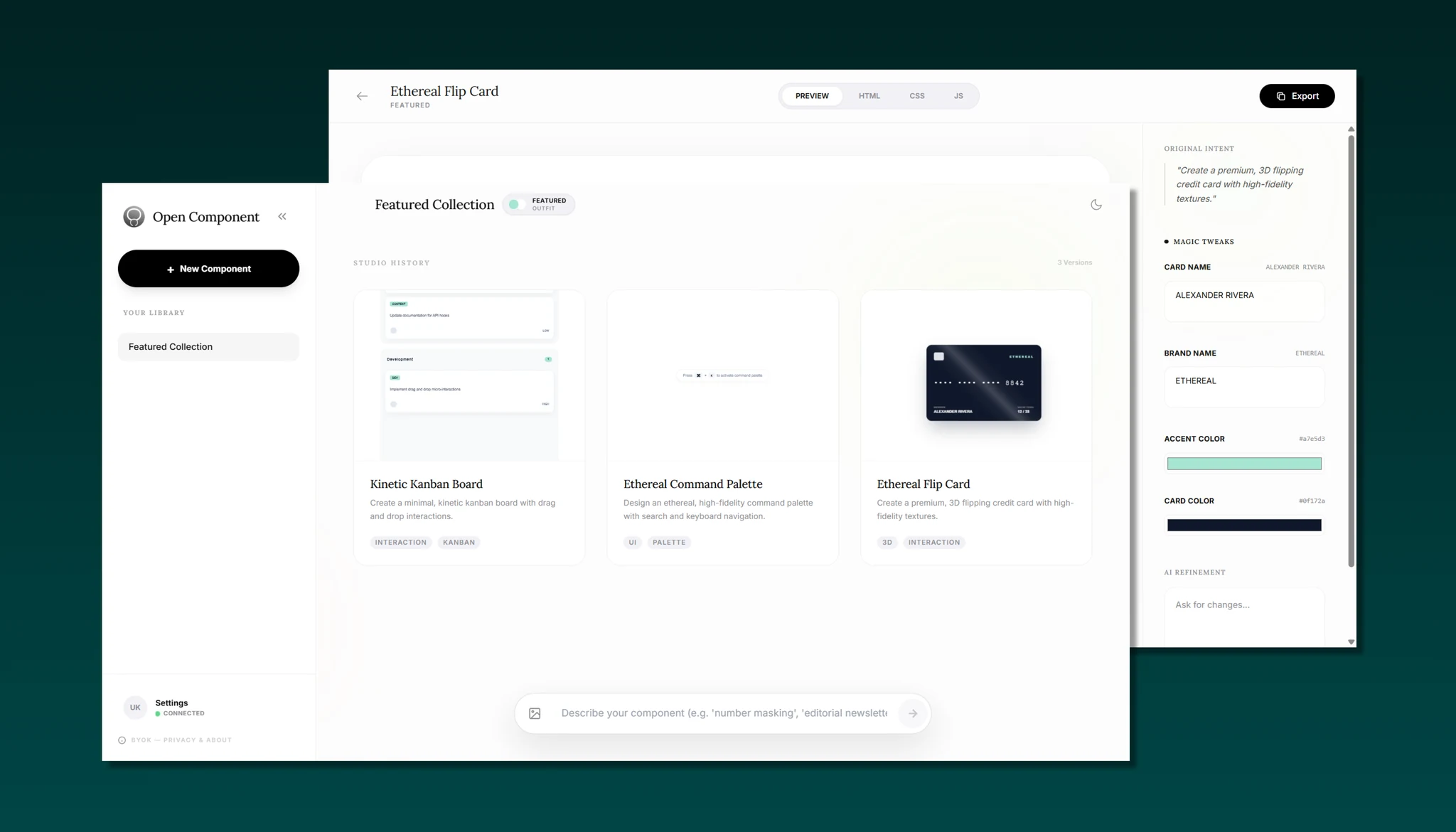
You want to generate a single UI widget—instead, mainstream AI site builders force whole-app lock-in.
When a generated button has the wrong padding or accent color, your only recourse in cloud-hosted site builders is re-prompting the model, burning API tokens, and praying the LLM doesn't break surrounding layouts.
Open Component Studio was built to solve this exact friction: a local-first workspace that turns LLMs into modular UI building-block generators without subscription paywalls or cloud lock-in.
A high-precision workbench designed for frontend developers and UI designers.
Engineered as a lightweight, zero-maintenance web application, Open Component Studio delegates structural generation to AI while keeping visual tuning 100% deterministic and instantaneous.
Runs 100% client-side via IndexedDB
Keys and prompts stay inside the browser
Live DOM CSS custom property patching
An abstraction mismatch in general-purpose AI web builders.
The fundamental flaw with general-purpose AI web generators isn't just subscription pricing—it is an architectural mismatch in granularity and control:
1. Scope Overreach
Full-app generators trade micro-interaction fidelity for macro structure, producing bloated, generic components lacking tactile polish.
2. Feedback Latency
Tweaking small visual parameters (padding, colors, radius) via natural language prompts introduces non-deterministic layout drift and model wait times.
3. Token & Privacy Leakage
Enterprise developers hesitate to route proprietary design tokens through third-party proxy servers when direct client API connections are possible.
Client-Side BYOK & IndexedDB Storagezero backend infrastructure overhead and total data privacy
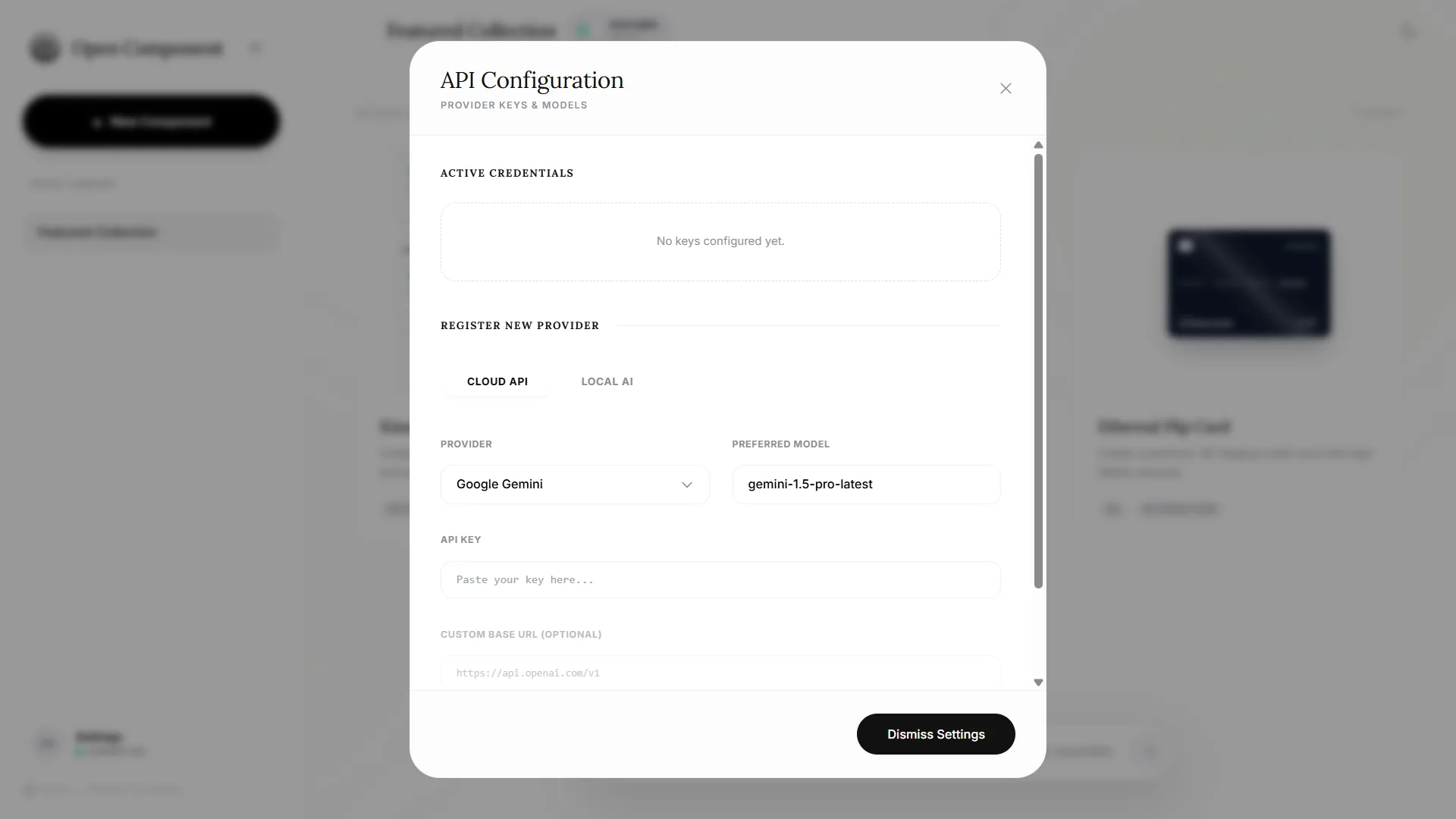
All API keys, prompt histories, and custom design tokens are stored locally in IndexedDB. API calls to Gemini, Claude, and local Ollama dispatch directly from the browser.
Trade-off: Eliminates server costs and guarantees 100% privacy, though users manage their own local key backups.
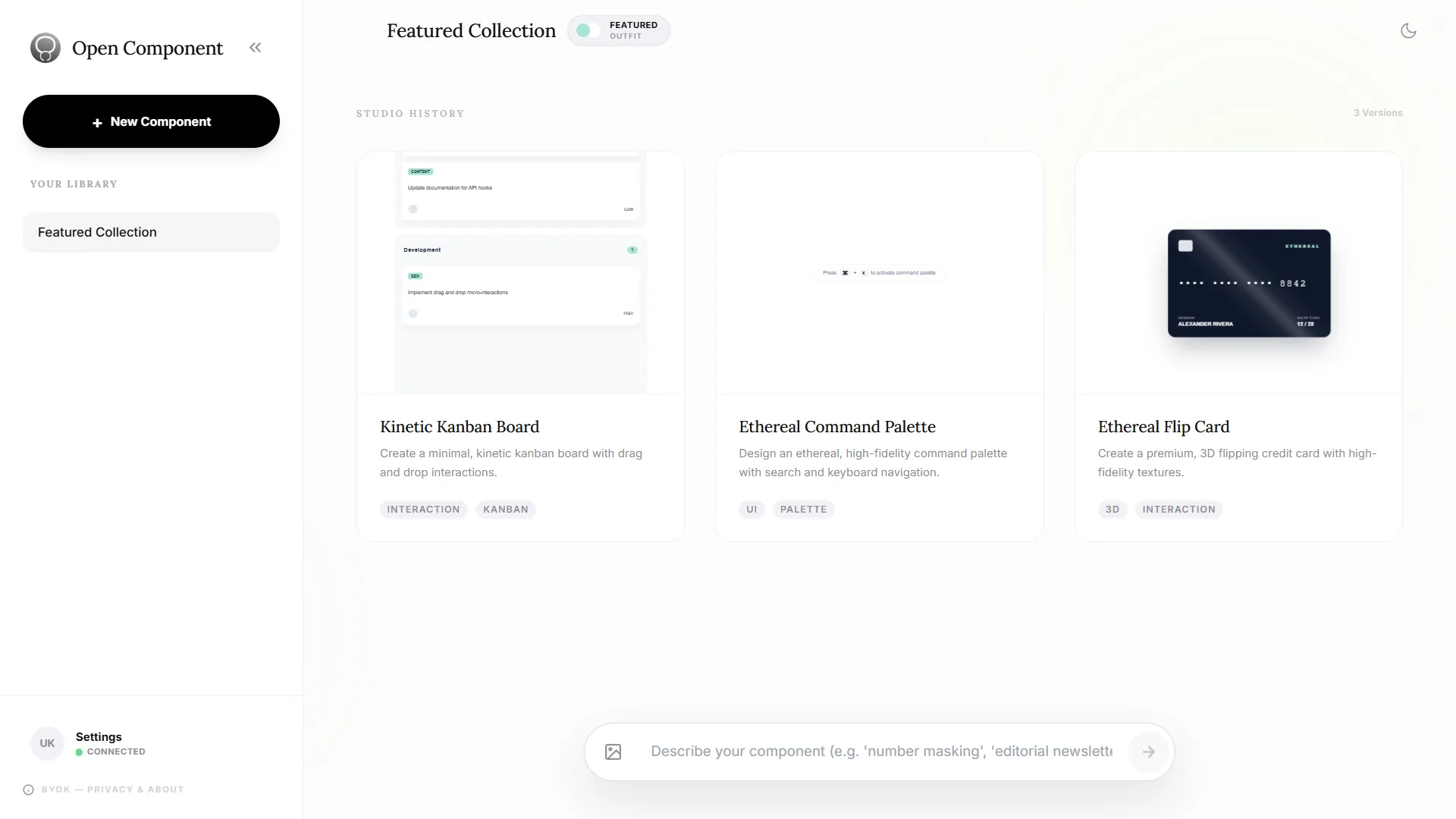
Component Scope over Full-App Bloatmodular UI building blocks with high visual fidelity
Restricts LLM outputs to self-contained, modular React components with standardized prop interfaces and scoped CSS variables.
Trade-off: Sacrifices multi-page routing in exchange for vastly superior micro-interaction polish and GSAP motion presets.
Magic Tweaks DOM Style Patchinginstant visual attribute tuning with 0ms model latency
Generated components consume CSS variables for design tokens. A visual control panel patches DOM styles in real-time without re-prompting the LLM.
Trade-off: Requires prompts to strictly format styles using CSS variables. In return, visual tweaks execute with zero latency and zero token cost.
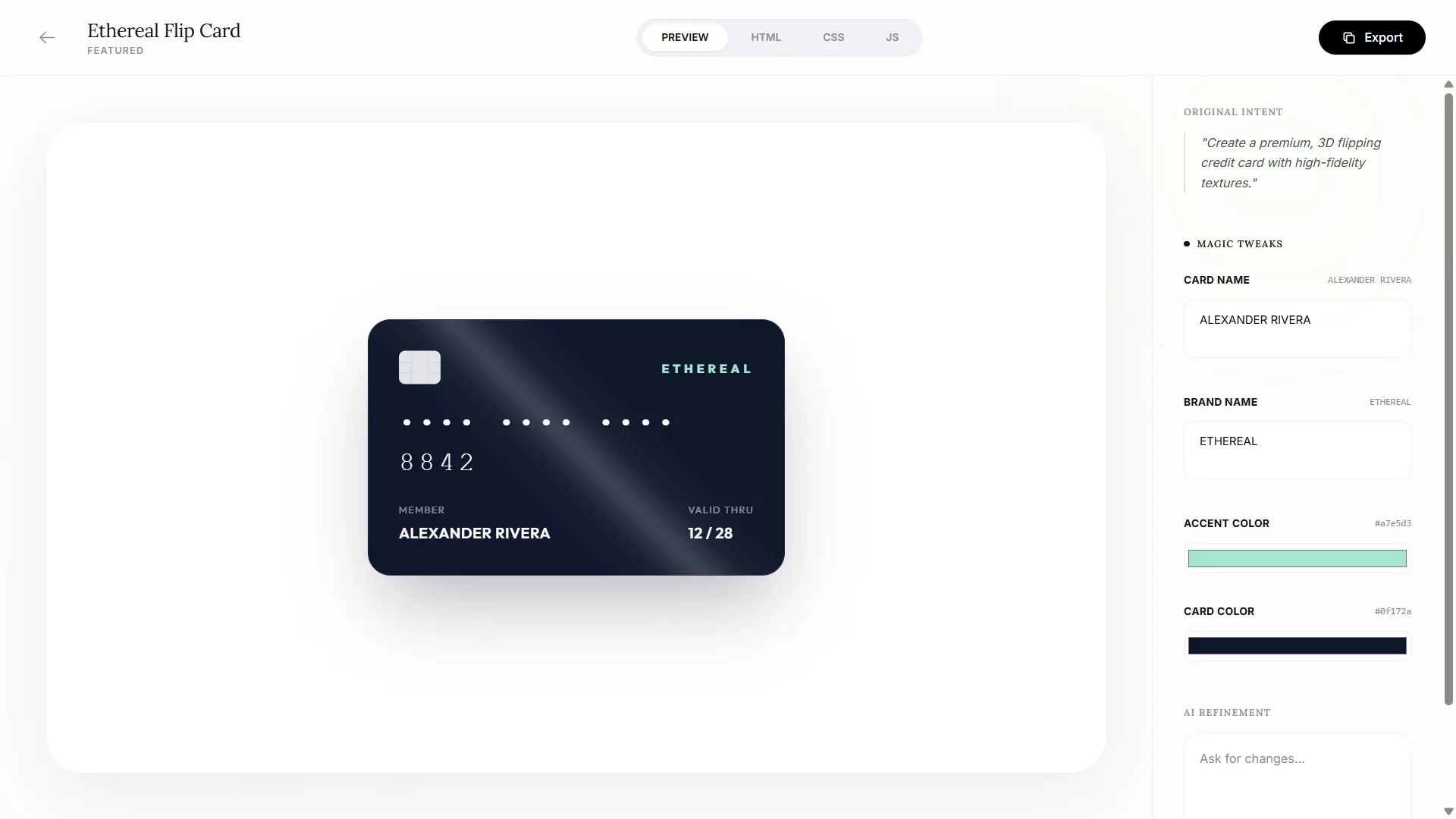
Magic Tweaks Engine
Visual attributes map directly to CSS custom properties, allowing instant DOM style patching without re-prompting the LLM.
Decoupling visual styling from code regeneration.
Early architectural approaches revealed major failure modes when relying on raw text generation for precise visual tweaks:
Logic & Physics Drift
Re-prompting the LLM to tweak padding or colors frequently stripped GSAP motion parameters or broke TypeScript interfaces. Pivoting to CSS custom property patching gave users 0ms deterministic control.
Sandbox Layout Shifts
Allowing arbitrary font strings caused fallback Times New Roman flashes. Constraining generation to a curated Google Font registry with pre-injected stylesheet links eliminated layout shifts.
Static PWA bundle with zero server compute fees.
Instant client DOM variable patching.
Prompts and tokens remain inside IndexedDB.
The 4-panel cockpit layout prioritizes power efficiency but can feel busy. I would add an adaptive "Focus Mode" that collapses control rails when editing micro-interactions.
Relying strictly on IndexedDB risks cache deletion. I would integrate the File System Access API to sync generated components as real `.tsx` files directly on local disks.